Nominations are now open for the New Forest Awards 2026 – a fantastic opportunity to celebrate the people, projects and traditions that make the New Forest so special.
There are six Awards, including the Commoning Champion category which was introduced last year.
Find out below how you can submit a nomination for the Awards, which are run by the New Forest National Park Authority along with the CLA.
Recognising the people behind New Forest commoning
Commoning is at the very core of what makes the New Forest unique. It is a centuries-old system that continues to shape the landscape, support biodiversity and sustain local communities today.
The Commoning Champion Award is all about recognising those who go above and beyond to support this way of life. That might be:
- A Commoner who shows outstanding dedication to their stock and the Forest
- Someone helping to keep traditional skills alive
- A young Commoner making their mark
- Or an individual working behind the scenes to support commoning in practical ways
These are the people who quietly make a huge difference and this award is a chance to shine a light on their efforts.
Why your nomination matters
Many of the most deserving individuals would never put themselves forward. That’s why nominations from the community are so important.
By taking a few minutes to nominate someone, you can:
- Recognise hard work and commitment
- Help raise awareness of commoning
- Celebrate the living traditions of the New Forest
- Ensure these vital contributions don’t go unnoticed
Every nomination helps tell the story of commoning and why it remains so important today.
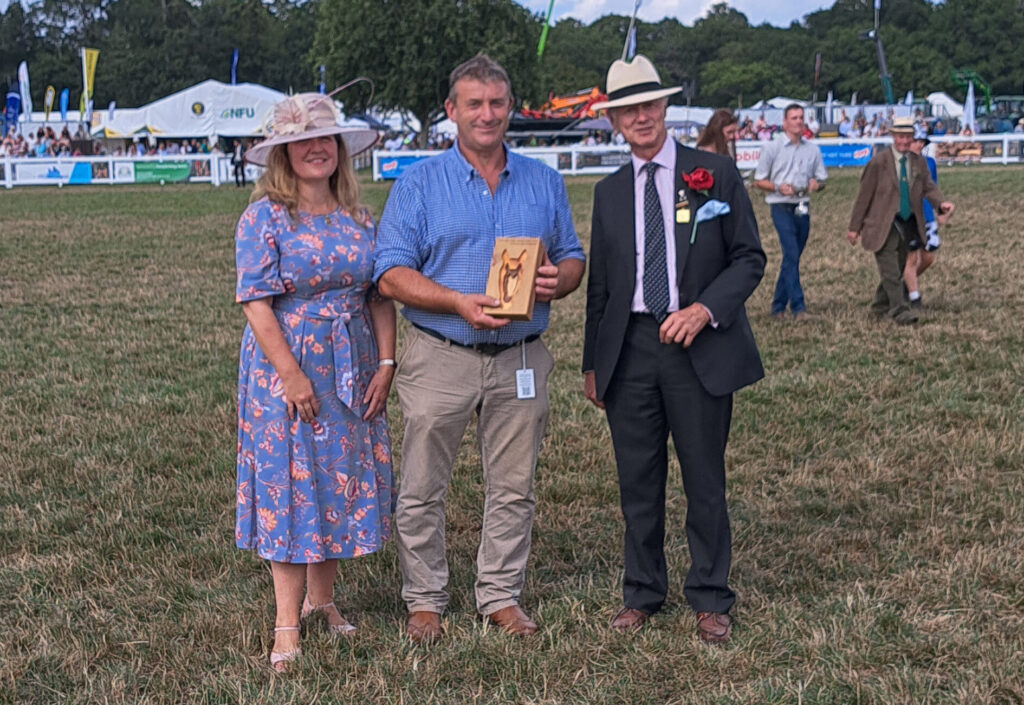
Andrew Parry-Norton was the Commoning Champion in 2025
Before you submit
Before putting forward a nomination, please read the key documents on the New Forest Awards website, including the category criteria and regulations. This will help ensure your nomination meets the requirements and has the best chance of success.
It’s also important to check that your nominee lives within the New Forest Awards boundary area, as outlined on the official map. Nominations that fall outside this area may not be eligible.
How to nominate
Submitting a nomination is quick and straightforward via the official New Forest Awards page.
You’ll be asked to explain why your nominee deserves recognition. This is your chance to share their story and highlight what makes them stand out.
The Government has now recognised New Forest Commoners under the Framework Convention for the Protection of National Minorities (FCNM).
The Ministry for Housing, Communities and Local Government has confirmed that even without being formally named in legislation, the New Forest Commoners are now ‘entitled to the rights and protections enshrined in the FCNM.’
It added: ‘this department offers reassurance that the New Forest Commoners culture will be preserved in any future devolution or reorganisation arrangements.’
What this means
National minority status is not symbolic. It creates a framework of obligations for how Government and public bodies must now act in relation to the New Forest Commoners as a distinct cultural community; a new line of defence and protection.
What FCNM requires in practice
The FCNM establishes a framework of legal rights and protections which now apply to practising Commoners, and which public bodies must adhere to.
The most relevant articles in the Convention are:
Article 4 — Equality and Fair Treatment → Prevent harm
- Public bodies must ensure that Commoners are not disadvantaged by policy or structural change
- Devolution and reorganisation must not harm commoning
- Policies must be tested for unintended and indirect negative impacts on commoning
Article 5 — Protection of Culture → Sustain commoning
- Public bodies must support the continuation of commoning as a living cultural system
- Grazing, pannage and land-based practices must be sustained as a legal obligation
- Policy must actively support, not merely avoid harming, commoning
Article 6 — Understanding and Respect → Fix institutional ignorance
- Authorities must promote proper understanding of commoning within institutions
- Officers and decision-makers must recognise its role and importance
- Misunderstanding or marginalisation must be actively avoided
Article 12 — Knowledge, Education and Awareness → Build long-term recognition
- Public bodies must promote awareness of Commoners’ culture in public life
- Commoning must be understood in policy, education and public discourse
- Its history and function must be clearly recognised by public bodies
Article 15 — Voice in Decision-Making → Secure voice and influence
- Commoners must have meaningful and effective participation in decisions affecting them
- Representation on authorities must be real, not symbolic or nominal
- Engagement must go beyond mere consultation to actually influence outcomes
Article 16 — Protection from Harmful Change → Guard against structural erosion
- Government and public bodies must avoid changes that undermine the community’s viability
- Structural reforms must not weaken commoning
- The long-term sustainability of the community must be considered in all decision-making
Why this matters now
Devolution and Local Government Reorganisation (LGR) create real risks to representation and continuity, and exacerbate pre-existing pressures.
Without clear application of FCNM, Commoners risk losing voice, influence, and protection.
With FCNM, there is a clear basis to safeguard the future of commoning as part of the developing structure of the new unitary and mayoral authorities.
The core principle
The New Forest Commoners are:
- A historic community with over 1,000 years of continuity
- A distinct cultural group, tied to a specific place
- Essential to the ecology and survival of the Forest
Recognition under FCNM is not creating something new — it is acknowledging an existing reality.
What this framework provides
Taken together, these Articles establish that Commoners must be treated fairly and without disadvantage, their culture must be actively sustained and their way of life must be understood and recognised by authorities.
Commoners’ voices must be heard and reflected in decision-making and structural change must not undermine the long-term viability of commoning.
What next?
The Government engages with the Council of Europe around proper application of FCNM for Commoners, and seeks formal naming at the next “FCNM cycle” (estimated 2028/9).
We continue to engage with Government about what this will mean on the ground.
Alignment of local authorities and institutions in how they engage with the new obligations.
Maintain pressure to ensure these principles are applied in practice as new authorities develop.
Further engage with Government on what impact FCNM recognition will have on housing allocation, authority representation, DEFRA policy and funding opportunities.
The New Forest Commoners Defence Association (CDA) delivered two short presentments highlighting ongoing matters affecting Commoners and the wider Forest at April’s Verderers’ Court session.
Speaking on behalf of the CDA, chair Andrew Parry-Norton raised the issues of burning in the Forest and perambulation fencing last Wednesday (April 15).
Burning programme
Andrew told the court the CDA acknowledged the challenges faced this year in delivering the Forest’s burning programme, with weather conditions limiting what could be achieved.
However, despite these difficulties, the CDA expressed its appreciation to Forestry England for the work that was completed.
The controlled burning programme remains an important tool in managing the New Forest’s habitats, and the efforts made under testing conditions were recognised as both valuable and much appreciated by Commoners.
Perambulation Fencing
Andrew also raised on behalf of the CDA ongoing concerns regarding the condition of perambulation fencing in certain areas of the Forest. This long-standing issue continues to present serious risks, with some fencing described as being in poor and potentially dangerous condition.
Inadequate fencing allows stock, including ponies and pigs, to pass through easily which creates risks not only for Commoners but also for neighbouring landowners and the public. Of particular concern is the potential for animals to gain access to busy roads.
The CDA urged the Verderers to once again engage with all relevant landowners, reminding them of their legal responsibilities and encouraging prompt action to address failing fencing. The Association stressed the need for continued follow-up where necessary to ensure that remedial work is carried out.
New Forest Commoners have been formally recognised by the UK Government as a national minority under the Council of Europe’s Framework Convention for the Protection of National Minorities (FCNM).
It represents a significant milestone for the protection of New Forest Commoners and their traditional way of life.
The Government has confirmed that while not yet explicitly named as a distinct group within the framework, New Forest Commoners are nonetheless entitled to the full rights and protections provided under the FCNM.
The letter also offered reassurance that Commoning culture will be safeguarded in the context of any future devolution or local government reorganisation.
The UK’s approach to the FCNM is reviewed on a five-year cycle, and it is anticipated that New Forest Commoners will be formally named in the next reporting round as part of this process. In the meantime, this recognition marks a highly positive step forward, confirming that Commoners’ interests must now be properly considered and protected.
Importantly, this status places clear obligations on emerging local authorities — including the proposed Mid Hampshire and Southwest Hampshire unitary authorities, as well as a Hampshire and Solent mayoral authority — to uphold and support the Commoning way of life.
This includes ensuring meaningful representation and due regard in decision-making that affects the Forest, particularly in areas such as land use, grazing, and rural management.
The Commoners Defence Association will be seeking further clarity from Government on how these obligations will be implemented in practice. This is especially relevant in light of recent developments affecting the Waterside area and the ongoing need to protect vital backup grazing land.
Looking ahead, this recognition may also open up new funding opportunities to support Commoners and the organisations that work alongside them to sustain the Forest’s unique landscape and traditions.
This important achievement has been secured by the New Forest Commoners Defence Association, thanks to the work of our chair Andrew Parry-Norton and Brice Stratford, with support from Julian Lewis, the New Forest National Park Authority, New Forest District Council, New Forest Association of Local Councils and the New Forest Cultural Council.
Together, this recognition represents a major step in securing the future of Commoning — ensuring that its cultural, environmental and economic importance is recognised at the highest level.
Residents of the New Forest district will be served by two new unitary councils from April 2028.
The announcement was made by the Government on Wednesday amid local government reorganisation (LGR) for Hampshire.
It means residents of the Waterside will receive services from a new local authority, alongside Southampton, Eastleigh and part of Test Valley while those in the rest of the Forest will receive their services from a separate new mid-Hampshire council.
This will also cover East Hampshire, Winchester and a large part of Test Valley.
The two new unitary councils will comprise:
- South West: Southampton, Eastleigh and the parishes of Totton and Eling, Marchwood, Hythe and Dibden, Fawley (New Forest) and Chilworth, Nursling and Rownhams, and Valley Park (Test Valley)
- Mid Hampshire: East Hampshire, Winchester, Test Valley and the New Forest, excluding the Parishes in the New Forest and Test Valley, specified above.
Kate Ryan, chief executive of New Forest District Council, said: ‘I know many residents will be wondering what this means for them and the services they rely on. The most important thing to say today is that nothing is changing right now.
‘There are no immediate changes to our services, our staff are still out doing their jobs, and the ways to contact us stay the same. It’s business as usual while in the background we work to create two successful new councils.’
Andrew Parry-Norton, chair of the New Forest Commoners’ Defence Association (CDA), delivered two presentments at this month’s Verderers’ Court.
He raised concerns on behalf of the CDA over car park café licences and encouraged support for the recognition of commoning as living heritage in a survey.
Speaking to Verderers on Wednesday, March 18, he reiterated the Association’s opposition to the licensing of mobile food and drink vans in New Forest car parks.
He stressed that the CDA’s position remains unchanged, with concerns centred on the impact the vans can have on commoning and the wider Forest environment.
While licences are now due for renewal, the CDA highlighted a previous commitment by Forestry England to relocate suitable vans into enclosed areas, with remaining sites fenced to prevent access by free-roaming livestock.
However, the CDA noted this undertaking has not yet been fulfilled so as a result, has formally requested the Verderers withhold their consent for any licence renewals unless – and until – these agreed conditions are properly implemented.
In a second presentment, Andrew issued a reminder to New Forest Commoners to fill in a survey regarding the long-term safeguarding of commoning through cultural recognition.
The Association is urging Commoners to complete the Inventory of Living Heritage survey, which forms part of a wider effort to have commoning acknowledged under the UNESCO Convention for the Safeguarding of Intangible Cultural Heritage.
The survey has been sent out to Commoners by the Verderers and CDA, with the deadline to complete it coming at the end of the week.
Read both presentments through the link below.
New Forest CDA presentment March 2026
New Forest Commoners are being urged to email Forestry England (FE) as soon as possible to obtain a parking permit.
It comes ahead of the roll-out of car parking charges across the New Forest by FE in all of its 129 car parks at the end of April.
Commoners must email the address below and then fill in an application form to secure their exemption.
A statement from FE says:
‘Practising Commoners will be exempt from charges for parking to ensure they can continue to tend to their livestock. This approach has been agreed with the Verderers of the New Forest and the Commoners’ Defence Association.
‘Forestry England will approve exemptions subsequent to confirmation by the Verderers that marking fees have been paid for the current year, or where continued commoning activity can be demonstrated through previous payment of marking fees and intent to de-pasture stock during the current year.
‘To apply for a commoning parking exemption, please contact newforestparking@forestryengland.uk who will be able to provide further details and an online application form.’
Discover the world of New Forest commoning during a special walk and talk led by two Young Commoners later this month.
The event, which takes place on Friday, March 27 between 10am and 12pm at Beaulieu Road sale yard, will offer a rare insight into one of the practices that helps shape the landscape of the New Forest.
Young Commoners Jake Moore and Tom Hordle will share their first-hand experiences of commoning, explaining how Commoners and their livestock play a vital role in maintaining the unique habitats and open landscapes that make the Forest so special.
The walk and talk will take place within the grounds of the sale yard, located opposite Beaulieu Road railway station. Tickets cost £5, with under-16s able to attend for free. Free parking will be available on site and toilet facilities are provided.
All proceeds will go towards supporting the New Forest Young Commoners
Tickets can be booked through the Eventbrite page
The walk and talk is part of the New Forest National Park Authority’s 2026 Awakening Festival, celebrating climate and nature throughout the month of March. Find out more about the festival on the NPA website
This year’s guest speaker at the Annual General Meeting (AGM) of the New Forest Commoners’ Defence Association will be Gemma Stride from Freshwater Habitats Trust.
Gemma works with land managers and conservation partners to protect and restore freshwater habitats, and will be speaking about the importance of ponds, streams and wetlands in supporting wildlife and Commoners’ livestock across the New Forest.
Freshwater habitats are among the most important environments for biodiversity in the UK, providing a home for a wide range of plants and animals.
Her talk will also highlight work being carried out through the CDA and partner organisations – such as the Species Survival Fund – to improve freshwater habitats within the Forest landscape.
The AGM will take place at Lyndhurst Community Centre at 7.30pm on Friday, April 24 and is open to all full and associate members of the CDA.
Members of the New Forest Commoners’ Defence Association (CDA) are warmly invited to attend the Annual General Meeting (AGM) which is taking place at the end of April.
The AGM is an important opportunity to hear about the work carried out over the past year to support commoning in the New Forest, and to look ahead to the challenges and priorities for the year to come.
The evening will include reports from officers, updates on key issues affecting Commoners, and the election of committee members. It is also a chance for members to raise questions, share views and contribute to the ongoing direction of the Association.
The meeting starts at 7.30pm on Friday, April 24 at Lyndhurst Community Centre.
Andrew Parry-Norton, chair of the New Forest CDA, said: ‘The AGM is always a valuable opportunity to reflect on what we have achieved together over the past year and to focus on the issues that matter most to Commoners in the New Forest.
‘The strength of the CDA lies in the active involvement of its members, and I would encourage anyone with views about how we can progress commoning to come along and take part.’
All full and associate members are encouraged to attend and take part in what promises to be an informative and constructive evening.
Refreshments will be provided and there will hopefully be a guest speaker too.
We look forward to seeing you there.
Members Login
 Latest Tweets
Follow us

@realnewforest 4h
Icilibus sam quas aut eriatem nume corepta auta conet officaborem quodi corepta auta conet officaborem quodi apernat ectlpa dolorpiaecus.
@realnewforest 4h
Icilibus sam quas aut eriatem nume corepta auta conet officaborem quodi corepta auta conet officaborem quodi apernat ectlpa dolorpiaecus.
@realnewforest 4h
Icilibus sam quas aut eriatem nume corepta auta conet officaborem quodi corepta auta conet officaborem quodi apernat ectlpa dolorpiaecus.
 Join us on Social
With thanks for support from