New Forest Commoners and national minority status – what it all means
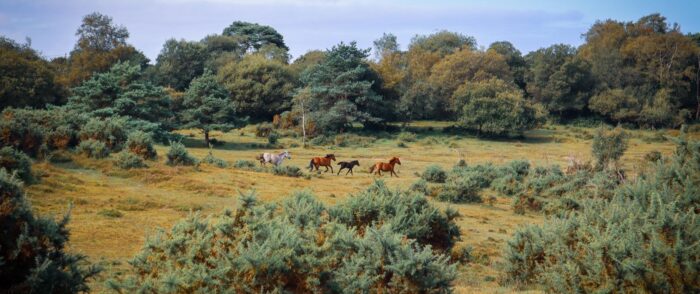 Ponies in the New Forest
The Government has now recognised New Forest Commoners under the Framework Convention for the Protection of National Minorities (FCNM).
The Ministry for Housing, Communities and Local Government has confirmed that even without being formally named in legislation, the New Forest Commoners are now ‘entitled to the rights and protections enshrined in the FCNM.’
It added: ‘this department offers reassurance that the New Forest Commoners culture will be preserved in any future devolution or reorganisation arrangements.’
What this means
National minority status is not symbolic. It creates a framework of obligations for how Government and public bodies must now act in relation to the New Forest Commoners as a distinct cultural community; a new line of defence and protection.
What FCNM requires in practice
The FCNM establishes a framework of legal rights and protections which now apply to practising Commoners, and which public bodies must adhere to.
The most relevant articles in the Convention are:
Article 4 — Equality and Fair Treatment → Prevent harm
- Public bodies must ensure that Commoners are not disadvantaged by policy or structural change
- Devolution and reorganisation must not harm commoning
- Policies must be tested for unintended and indirect negative impacts on commoning
Article 5 — Protection of Culture → Sustain commoning
- Public bodies must support the continuation of commoning as a living cultural system
- Grazing, pannage and land-based practices must be sustained as a legal obligation
- Policy must actively support, not merely avoid harming, commoning
Article 6 — Understanding and Respect → Fix institutional ignorance
- Authorities must promote proper understanding of commoning within institutions
- Officers and decision-makers must recognise its role and importance
- Misunderstanding or marginalisation must be actively avoided
Article 12 — Knowledge, Education and Awareness → Build long-term recognition
- Public bodies must promote awareness of Commoners’ culture in public life
- Commoning must be understood in policy, education and public discourse
- Its history and function must be clearly recognised by public bodies
Article 15 — Voice in Decision-Making → Secure voice and influence
- Commoners must have meaningful and effective participation in decisions affecting them
- Representation on authorities must be real, not symbolic or nominal
- Engagement must go beyond mere consultation to actually influence outcomes
Article 16 — Protection from Harmful Change → Guard against structural erosion
- Government and public bodies must avoid changes that undermine the community’s viability
- Structural reforms must not weaken commoning
- The long-term sustainability of the community must be considered in all decision-making
Why this matters now
Devolution and Local Government Reorganisation (LGR) create real risks to representation and continuity, and exacerbate pre-existing pressures.
Without clear application of FCNM, Commoners risk losing voice, influence, and protection.
With FCNM, there is a clear basis to safeguard the future of commoning as part of the developing structure of the new unitary and mayoral authorities.
The core principle
The New Forest Commoners are:
- A historic community with over 1,000 years of continuity
- A distinct cultural group, tied to a specific place
- Essential to the ecology and survival of the Forest
Recognition under FCNM is not creating something new — it is acknowledging an existing reality.
What this framework provides
Taken together, these Articles establish that Commoners must be treated fairly and without disadvantage, their culture must be actively sustained and their way of life must be understood and recognised by authorities.
Commoners’ voices must be heard and reflected in decision-making and structural change must not undermine the long-term viability of commoning.
What next?
The Government engages with the Council of Europe around proper application of FCNM for Commoners, and seeks formal naming at the next “FCNM cycle” (estimated 2028/9).
We continue to engage with Government about what this will mean on the ground.
Alignment of local authorities and institutions in how they engage with the new obligations.
Maintain pressure to ensure these principles are applied in practice as new authorities develop.
Further engage with Government on what impact FCNM recognition will have on housing allocation, authority representation, DEFRA policy and funding opportunities.
Members Login
 Latest Tweets
Follow us

@realnewforest 4h
Icilibus sam quas aut eriatem nume corepta auta conet officaborem quodi corepta auta conet officaborem quodi apernat ectlpa dolorpiaecus.
@realnewforest 4h
Icilibus sam quas aut eriatem nume corepta auta conet officaborem quodi corepta auta conet officaborem quodi apernat ectlpa dolorpiaecus.
@realnewforest 4h
Icilibus sam quas aut eriatem nume corepta auta conet officaborem quodi corepta auta conet officaborem quodi apernat ectlpa dolorpiaecus.
 Join us on Social

Tag your images #RealNewForest
With thanks for support from